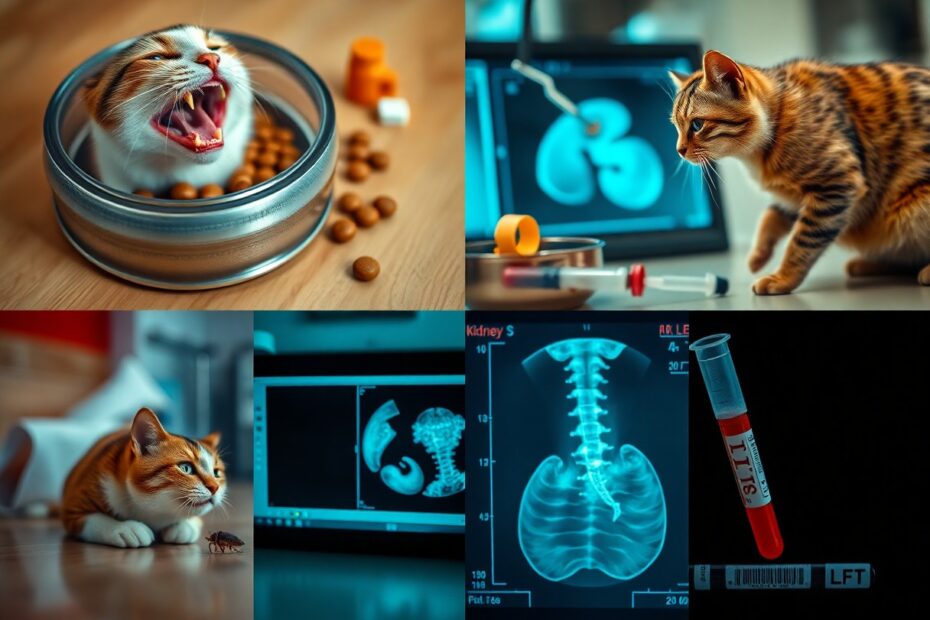
When your cat stops eating, it’s rarely just a picky phase — it’s almost always a signal that something is genuinely wrong, and ignoring it for more than 24–48 hours can become a medical emergency.
Cats have a unique metabolic vulnerability: unlike dogs or humans, they can develop a life-threatening liver condition called hepatic lipidosis (fatty liver disease) within just 2–3 days of not eating. Their bodies rapidly mobilize fat stores when starved, overwhelming the liver. So while one missed meal isn’t panic-worthy, two or more days of food refusal absolutely warrants a vet call.
Let’s break down the nine most common reasons your cat has turned its nose up at the food bowl — and what each one actually means for you as a cat owner.
1. Dental Disease and Mouth Pain
Imagine trying to eat with a broken tooth or infected gum. That’s exactly what many cats suffer through silently. Dental disease is one of the most underdiagnosed causes of appetite loss in cats, largely because cats are masters at hiding pain.
Signs to watch for include dropping food from the mouth while chewing, pawing at the face, bad breath, or suddenly preferring wet food over dry kibble. Studies suggest that over 70% of cats show some form of dental disease by age three.
If your cat avoids crunchy food but still shows interest in wet food or treats, dental pain is one of the first things to rule out.
What to do
- Check inside the mouth for red, swollen gums or visible broken teeth
- Schedule a dental exam with your vet — professional cleaning under anesthesia is often required
- Switch temporarily to wet food to reduce chewing pain while you wait for the appointment
2. Underlying Illness
Loss of appetite is one of the body’s most universal distress signals, and cats are no different. A wide range of illnesses — from a simple upper respiratory infection to something as serious as cancer — can cause a cat to stop eating.
The key is to look at the whole picture. Is your cat also lethargic, vomiting, drinking more water, or losing weight? Each combination of symptoms points in a different diagnostic direction. A cat that’s off its food but otherwise acting normal is a different concern from a cat that’s lethargic, hiding, and refusing water.
Illnesses commonly linked to appetite loss
- Kidney disease (often paired with increased thirst and vomiting)
- Liver disease
- Pancreatitis (inflammation of the pancreas)
- Hyperthyroidism in older cats
- Cancer (especially lymphoma, which is common in cats)
- Respiratory infections (a stuffed-up nose means cats can’t smell food)
- Gastrointestinal issues including parasites, colitis, and gastroenteritis
3. Stress and Anxiety
Cats are deeply territorial and routine-dependent creatures. Any disruption to their environment — a new baby, a house move, a new pet, a change in your schedule, or even rearranging furniture — can trigger enough anxiety to suppress their appetite.
Stress-related appetite loss is one of the trickier causes to identify because there’s no physical symptom to point at. The cat looks fine, but simply won’t eat. If you’ve recently changed something in the home environment, that’s your first clue.
Signs it might be stress-related
- Appetite loss started around the time of a specific change
- Your cat is also hiding more or seems withdrawn
- There’s a new pet or person in the home
- The food bowl was recently moved
4. Food Changes or Preferences
Cats can be genuinely finicky — but there’s a real physiological reason behind it. Cats imprint on certain food textures, flavors, and aromas early in life. Switch brands or formulas suddenly, and many cats will simply refuse to eat the new food.
The key word here is “suddenly.” A gradual transition over 7–10 days — mixing increasing amounts of new food with decreasing amounts of the old — is the recommended approach. Cold food is another overlooked trigger. Cats often prefer food at room temperature or slightly warm because the aroma is stronger.
Quick fixes to try
- Mix new food with old food gradually over one to two weeks
- Warm wet food slightly to enhance the smell
- Try a different protein source or texture (pâté vs. chunks)
- Drizzle a small amount of low-sodium chicken broth over the food
5. Dirty Bowl or Unpleasant Eating Environment
This one surprises most cat owners, but cats have an extremely sensitive sense of smell and are naturally hygienic animals. A food bowl that smells of old food residue, soap, or plastic can be enough for some cats to refuse eating altogether.
Plastic bowls are a known offender — they harbor bacteria in tiny scratches and can also cause feline acne on the chin. Stainless steel or ceramic bowls are the better choice. Beyond the bowl, cats also dislike eating near their litter box or in noisy, high-traffic areas.
6. Hairballs
Cats groom themselves constantly, which means they inevitably swallow loose fur. Most of the time, this passes through the digestive system. But when it accumulates into a hairball in the stomach, it creates a blockage that makes eating uncomfortable or nauseating.
A cat with a hairball will often show repeated retching without producing anything, followed by reluctance to eat. You might eventually find a cylindrical clump of fur and bile — not pleasant, but a clear answer. Long-haired breeds like Persians and Maine Coons are especially prone.
Prevention
- Brush your cat regularly to reduce swallowed fur
- Use hairball-specific cat food or supplements
- Add a small amount of plain canned pumpkin (not pie filling) to food as a fiber aid
7. Recent Vaccination or Medication
It’s completely normal for a cat to feel off for 24–48 hours after receiving vaccinations. Mild nausea and a reduced appetite are common side effects as the immune system responds.
Similarly, many medications — antibiotics, anti-inflammatories, and chemotherapy drugs — list nausea and appetite suppression as side effects. If your cat’s food refusal started shortly after beginning a new medication, the medication is likely the culprit, not a new illness.
If the loss of appetite persists beyond 48 hours post-vaccination or continues throughout a medication course, contact your vet. They may be able to adjust dosing times, prescribe an anti-nausea medication, or suggest a different formulation.
8. Pain (Unrelated to Teeth)
Cats in pain stop eating. It’s a natural response — digestion requires energy and bodily resources that an injured or hurting cat would rather redirect. Internal pain from conditions like arthritis, bladder infections, kidney stones, or an injury is often invisible to the owner.
The tricky part is that cats evolved to hide pain as a survival instinct. A cat in significant discomfort may still purr, move around the house, and appear functional — while quietly not eating for days.
Watch for subtle signs like reluctance to jump, changed posture, or flinching when touched in specific areas. These are clues that pain may be the underlying cause.
9. Heat Cycles in Unspayed Female Cats
If you have an unspayed female cat, her heat cycle is a straightforward explanation for temporary appetite loss. During estrus, hormonal shifts significantly reduce interest in food, and the cat is behaviourally focused on finding a mate rather than eating.
This is temporary and resolves once the heat cycle ends — typically within one to two weeks. However, if your cat goes through heat cycles repeatedly without being spayed, this pattern of appetite disruption will recur. Spaying eliminates this issue entirely and also removes the risk of uterine infections and reproductive cancers.
How Long Is Too Long?
This is the question every cat owner eventually asks. Here’s a clear framework:
| Timeframe | Situation | Action |
|---|---|---|
| Less than 24 hours | Single missed meal, no other symptoms | Monitor, try warming the food |
| 24–48 hours | Still not eating, otherwise acting normal | Try food changes, monitor closely |
| 48–72 hours | Still refusing food | Call your vet — appointment needed |
| 72+ hours | Not eating at all | Emergency vet visit — hepatic lipidosis risk |
| Any duration | Not eating AND vomiting, lethargic, or hiding | Emergency vet immediately |
When to Go to the Emergency Vet
Some situations bypass the “wait and see” approach entirely. Go to an emergency vet right away if your cat stops eating and shows any of the following:
- Complete refusal to drink water
- Repeated vomiting (more than twice in 24 hours)
- Visible jaundice (yellowing of the eyes or skin)
- Extreme lethargy or inability to stand
- Bloated or painful abdomen
- Difficulty breathing
- Recent ingestion of a toxic substance or foreign object
Appetite loss in cats is a symptom, not a diagnosis. The nine causes above range from something as harmless as a dirty bowl to something as serious as organ failure. The faster you identify which category you’re dealing with, the better the outcome for your cat.