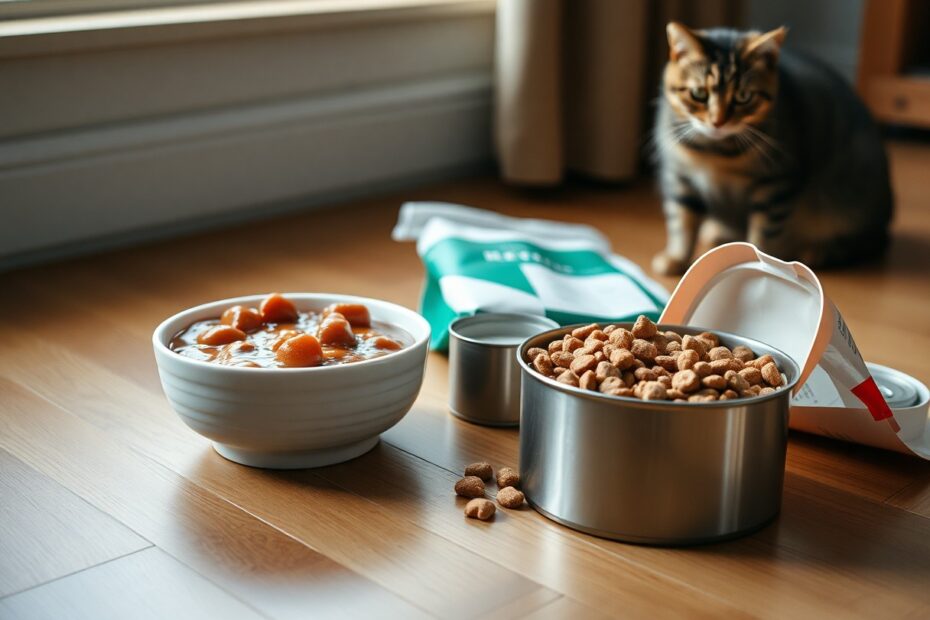
Choosing between wet and dry cat food is one of the most common decisions cat owners face. Both options can provide complete and balanced nutrition, but they differ in moisture content, calorie density, convenience, cost, and potential health benefits. Understanding these differences is important because the right choice can impact your cat’s hydration, weight management, dental health, and overall well-being.
The truth is that there is no single best answer for every cat. Factors such as age, activity level, medical conditions, preferences, and lifestyle all play a role in determining the ideal diet. In this guide, we’ll compare wet and dry cat food, examine their pros and cons, and help you decide which option is best for your cat’s individual needs.
The Nature of the Kibble
Kibble is the most common form of dry cat food, shaped into small, crunchy pieces through an industrial process called extrusion. This method involves mixing raw ingredients, applying heat and pressure, then forcing the mixture through molds before drying. The end result is a shelf-stable product that many cat owners find convenient for daily feeding.
Manufacturers often use a blend of animal by-products, grains, and plant-based proteins to formulate kibble, aiming to meet basic nutritional standards. While some premium brands prioritize high-quality meat sources, many budget options rely heavily on fillers like corn or soy to reduce costs. The high-heat processing can degrade certain nutrients, which is why synthetic vitamins and minerals are typically added back afterward.
Despite its widespread availability, kibble’s composition varies dramatically between brands. You’ll need to read labels carefully to understand what your cat is actually consuming. Not all proteins are created equal, and ingredient order matters-those listed first make up the largest portion of the food.
Processing and Ingredients
Extrusion, the primary method used to make kibble, subjects ingredients to high temperatures and pressure, altering the structure of proteins and reducing the bioavailability of some nutrients. This intense process allows for longer shelf life but may compromise the natural quality of ingredients. You’ll often find that even foods listing meat as the first ingredient contain a high proportion of plant-based fillers once moisture is removed.
Starch is vital in kibble production because it acts as a binder, helping the pieces hold their shape during manufacturing. Most dry foods contain 30-50% carbohydrates, a level far above what cats would consume in the wild. Your cat, as an obligate carnivore, has limited need for carbs and lacks certain digestive enzymes to process them efficiently.
Synthetic nutrients are routinely added post-cooking to compensate for losses during processing. These include taurine, vitamins, and vital fatty acids that degrade under heat. While these additions make kibble nutritionally complete on paper, the long-term effects of consuming processed, fortified foods remain a topic of discussion among feline nutrition experts.
Caloric Density
Dry food packs more calories into a smaller volume compared to wet food, primarily because it contains far less moisture-typically only 6-10%. This high caloric density means your cat can consume a large number of calories without feeling full, increasing the risk of overeating. A single cup of kibble may contain the same energy as several cans of wet food, making portion control vital.
Because kibble is energy-rich and easy to leave out all day, free-feeding can quickly lead to weight gain. Your cat’s natural eating pattern involves small, frequent meals, but the convenience of dry food often encourages unrestricted access. Without monitoring intake, this setup supports gradual, unnoticed calorie accumulation over time.
Obesity in cats is linked to serious health issues like diabetes, arthritis, and liver disease. Choosing a lower-calorie kibble or mixing in wet food can help manage energy intake. You’ll want to calculate your cat’s daily needs based on weight and activity level, then stick to measured portions rather than guessing.
Understanding caloric density helps you make smarter feeding choices. Since kibble is more concentrated in calories, even small portions add up fast. Measuring servings precisely and avoiding treats on top of regular food prevents excess intake. Consider using puzzle feeders or timed dispensers to slow down eating and enhance satiety without adding calories.
Health Effects and Vitality
Every cat thrives when their diet supports long-term wellness, and the choice between wet and dry food plays a major role in their overall health. How your cat feels day to day-energy levels, coat shine, digestion-often reflects what’s in their bowl. While both food types can meet nutritional needs, their impact on vitality varies based on moisture, calorie density, and ingredient composition.
Hydration quietly influences nearly every bodily function, from joint lubrication to temperature regulation. Wet food naturally delivers more water, helping cats maintain fluid balance without relying solely on drinking. Dry food, though convenient, may contribute to chronic low-level dehydration if your cat isn’t a consistent drinker. Over time, this subtle deficit can affect organ efficiency and reduce resilience.
Your cat’s energy and metabolic health depend on consistent nutrient absorption and balanced intake. Wet food often contains higher-quality protein and fewer carbohydrates, aligning more closely with feline biology. Dry food may offer convenience, but its processing and starch content can influence insulin response and fat storage. Choosing wisely supports not just survival, but true feline vitality.
Weight Management
Wet food often supports healthier weight control due to its lower carbohydrate content and higher moisture levels. Cats eating wet food tend to feel full faster, reducing the urge to overeat. Since many dry kibbles rely on starches as binders, they can contribute to excess calorie intake, especially in less active or indoor cats.
Your cat’s metabolism functions best when fueled by protein-rich meals that mimic natural prey. Wet food typically delivers more animal-based protein per serving, helping preserve lean muscle mass during weight loss. Dry food, while energy-dense, may encourage mindless nibbling, making portion control more difficult over time.
Feeding wet food can also slow eating pace, giving your cat time to register satiety. This natural pause helps prevent the calorie surplus that leads to obesity. If your cat is prone to weight gain, switching to a primarily wet food diet-paired with scheduled meals-can make a measurable difference in body condition.
Urinary Tract Function
Water intake directly affects your cat’s urinary health, and wet food significantly boosts daily hydration. Increased moisture dilutes urine, reducing the concentration of minerals that can form crystals or stones. Cats fed primarily dry food often have more concentrated urine, raising the risk of urinary tract issues like cystitis or blockages.
Lower urine concentration also helps maintain a healthy bladder lining and discourages bacterial growth. Many cats naturally drink little, so relying on food moisture becomes imperative. Wet food provides a consistent source of hydration, supporting kidney filtration and urinary flow without requiring behavioral changes in drinking habits.
Veterinarians frequently recommend wet food for cats with a history of urinary problems. Even healthy cats benefit from the preventive effects of higher water consumption. Over time, this simple dietary shift can reduce vet visits and improve comfort, especially in male cats who are more vulnerable to blockages.
Supporting urinary tract function isn’t just about avoiding disease-it’s about maintaining daily comfort and internal balance. Consistently moist urine means less irritation, fewer accidents outside the litter box, and reduced strain during elimination. By choosing wet food, you’re not just feeding your cat; you’re actively protecting a delicate but imperative system.
Dental Hygiene Realities
Many cat owners believe dry food naturally keeps their pet’s teeth clean, but this assumption doesn’t hold up under veterinary scrutiny. While kibble is often marketed as beneficial for dental health, studies show it typically crumbles too quickly to provide meaningful scrubbing action. Most cats swallow dry pellets whole or with minimal chewing, bypassing any potential mechanical benefit. Even specially formulated “dental diets” offer only modest improvements and can’t replace proper oral care routines. Relying solely on dry food for tartar control sets unrealistic expectations and may delay more effective interventions.
Tartar Control Myths
Some pet food brands claim their kibble reduces plaque by 70% or more, but these results often come from controlled studies that don’t reflect real-world feeding. Your cat’s chewing behavior, diet variety, and genetics play larger roles in tartar buildup than food texture alone. Dry food doesn’t clean below the gumline, where periodontal disease often begins. Without daily toothbrushing or veterinary dental cleanings, even the best kibble won’t prevent gingivitis or tooth loss over time.
Mechanical Cleaning Action
Chewing does stimulate saliva and provide some surface abrasion, but the effect is limited with most commercial dry foods. Kibble tends to shatter on contact, reducing friction against tooth surfaces. Larger, specially designed dental kibbles may encourage more chewing, but they’re not a substitute for brushing. Even then, cats are biologically inclined to gulp rather than grind their food, minimizing any cleaning benefit. True mechanical cleaning requires consistent, targeted effort beyond what diet alone can deliver.
Your cat’s jaw motion during eating is mostly vertical, not the side-to-side grinding seen in herbivores, which limits natural plaque removal. This anatomical reality means food texture has minimal impact on dental health compared to active care like brushing or using veterinarian-approved dental treats.
Making the Choice
Choosing between wet and dry cat food depends heavily on your cat’s individual needs, lifestyle, and health status. You know your cat better than anyone-how they eat, their energy levels, and any recurring health concerns. Age, activity level, and medical history all play a role in determining which type of food supports their well-being most effectively. There’s no universal answer, but understanding your cat’s unique requirements brings you closer to the right decision.
Preferences vary, but so do nutritional demands at different life stages. A young, active cat may thrive on one diet, while an older cat with slower metabolism may need something different. Dental health, hydration, and weight management are all factors you’ll want to weigh carefully. Your veterinarian can offer guidance tailored to your cat’s condition, helping you balance convenience with long-term health.
Ultimately, the best choice supports sustained health and fits seamlessly into your daily routine. You’re not just feeding your cat-you’re nurturing their quality of life. Whether you choose wet, dry, or a combination, consistency and quality matter most. Pay attention to how your cat responds-shiny coat, steady weight, and high energy are good signs you’re on the right track.
Senior Cat Needs
As your cat ages, their metabolism slows and their ability to process nutrients changes. Older cats often struggle with dehydration, making wet food a strong contender for maintaining kidney and urinary health. You may notice your senior cat has dental issues or reduced appetite, both of which wet food can help address with its soft texture and strong aroma.
Dry food can still play a role if your senior cat has healthy teeth and enjoys chewing. It may support dental hygiene by reducing plaque buildup, but only if your cat eats enough of it consistently. For cats with chronic conditions like diabetes or kidney disease, your vet might recommend a specific moisture-rich diet to ease strain on internal organs.
Monitoring your senior cat’s weight and energy is key. Sudden changes can signal underlying problems that diet adjustments may help manage. You’re not just choosing food-you’re supporting comfort and longevity in their golden years.
Kitten Development
Kittens grow rapidly in their first year, requiring more calories and nutrients per pound than adult cats. Wet food delivers high protein and moisture, supporting muscle development and hydration during this critical stage. You’ll often find kitten-specific wet formulas packed with taurine and DHA, necessary for brain and eye development.
Dry food can be beneficial too, especially for free-feeding when you’re not home to serve meals. Its concentrated calories help meet high energy demands, and the texture may aid jaw development as your kitten chews. However, ensure fresh water is always available, as dry food alone won’t provide sufficient hydration.
Many breeders and vets recommend starting kittens on a mix of both types to build flexible eating habits. You’re laying the foundation for lifelong health, so focus on quality ingredients and consistent feeding patterns. Watch for steady weight gain and playful behavior-signs your kitten is thriving.
Feeding your kitten a balanced diet early on can prevent picky eating later. Introducing both wet and dry options helps them adapt to different textures and flavors, making future transitions easier. You’re not just filling a bowl-you’re shaping long-term eating behaviors that support resilience and health.
Mixing Both Options
Combining wet and dry food gives you the flexibility to meet your cat’s nutritional and behavioral needs. You can offer wet food at mealtimes for hydration and palatability, while leaving dry food out for nibbling throughout the day. This approach often satisfies picky eaters and supports consistent energy levels.
Many cats enjoy the variety, and you benefit from the convenience of dry food with the health perks of wet. You control portion sizes and can adjust ratios based on your cat’s weight, age, or vet recommendations. It’s a practical compromise that supports both health and lifestyle.
When mixing, choose high-quality formulas that complement each other nutritionally. Avoid overfeeding by calculating total daily calories across both types. You’re not just serving food-you’re creating a balanced, sustainable routine tailored to your cat’s life.
Rotating or blending wet and dry food can prevent dietary boredom and encourage hydration without sacrificing convenience. You maintain control over ingredients and feeding schedules while giving your cat sensory variety. This balanced method often leads to better long-term acceptance of different foods, especially during vet-recommended diet changes.
Summing up
Conclusively, your cat’s ideal diet depends on individual health, age, and preferences. Wet food offers high moisture content, supporting urinary and kidney health, especially beneficial for cats prone to dehydration. Its strong aroma and soft texture appeal to picky eaters and older cats with dental issues. You may notice improved coat condition and energy levels when incorporating wet food into their routine.
Dry food provides convenience and longer shelf life, making it practical for free-feeding and portion control. It can support dental health by reducing plaque buildup, though this benefit varies among cats. If your cat has no medical conditions requiring a moisture-rich diet, dry food can be a nutritionally complete option when fed in proper amounts.
You must assess your cat’s unique needs-consult your veterinarian to balance cost, lifestyle, and health. Many owners find success combining both types, offering hydration from wet food and convenience from dry. Your cat’s well-being hinges not on the format alone, but on consistent, high-quality nutrition tailored to their life stage and medical history.